Boy, oh boy, oh boy... last post was two years ago! Life happened and I just didn't do anything music-wise. I finally broke the long snooze, dusted off the guitar, got some cool effects, took some piano lessons and finally wrote a new song, "Still Here".
Here's a "draft" version.
Big to-do's are:
1) Farm out bass parts
2) Figure out final structure
3) Figure out lead (if any)
4) Decide if I'm just going to use the same file or re-record all the parts from scratch (original intention)
I've already asked a couple of friends to see if they can come up with an improved version of the bass parts. If you're interested in taking a stab on the bass, please leave a comment let's see if we can collaborate online.
Lyric Inspiration: Bastards Young - The Replacements
Read about it in a Rolling Stones interview with Tim Kaine (Issue 1273, 11/3/16 p.15). He pointed out a favorite lyric from the song Bastards Young by The Replacements :
View Entire Lyrics
The ones who love us best are the ones we'll lay to rest
And visit their graves on holidays at best
The ones who love us least are the ones we'll die to please
If it's any consolation, I don't begin to understand themThis is so relevant to me.
View Entire Lyrics


"DON'T ASK FOR A MILLION DOLLARS" - A Valuable Takeaway From A Rolling Stone Article
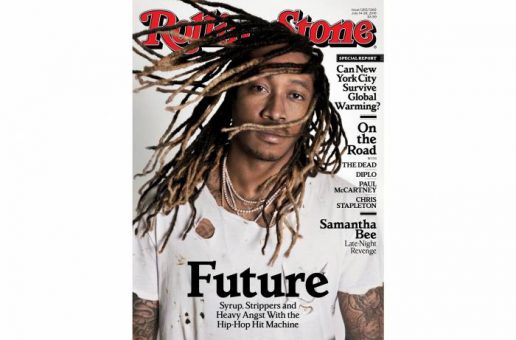
I've piled on quite a stack of unread magazine titles which I intend to digest before tossing them. It usually takes me two to three days to finish one particular issue. I'm working through my Rolling Stone magazine subscription. As of this writing, I'm about halfway through Issue #1265/1266, July 14-29, 2016. On the cover is Hip Hop artist, Future.
NEW ADDITION: THE TC HELICON HARMONY SINGER
I've been toying with the idea of going to open mics to play acoustic sets. Since I love harmonies, I thought a vocal effect processor would come in handy. So last February, I got a TC-Helicon Harmony Singer . From the reviews and videos I've read and seen, it seemed to be a nifty compact gadget.
I've gotten busy with my photography business so the Harmony Singer has been sitting in the box for the past two months. I still need to check it out so I'll be posting my review and maybe some demo videos when I get to it.
. From the reviews and videos I've read and seen, it seemed to be a nifty compact gadget.I've gotten busy with my photography business so the Harmony Singer has been sitting in the box for the past two months. I still need to check it out so I'll be posting my review and maybe some demo videos when I get to it.
The Man Who Sold The World - David Bowie on SNL via HuluPLUS
One of my musical influences was Nirvana and back in my college band days, I remember performing a cover of their cover of David Bowie's "The Man Who Sold The World".
I've been watching Saturday Night Live from the very first season and I enjoy seeing my favorite actors, actresses, comedians and musicians in their younger days.
What a delight to watch David Bowie on Season 5, Episode 7 performing "The Man Who Sold The World". I thought I'd post the excerpt on my blog so I can easily go back to it whenever I want to.
I hope you enjoy it too.
I've been watching Saturday Night Live from the very first season and I enjoy seeing my favorite actors, actresses, comedians and musicians in their younger days.
What a delight to watch David Bowie on Season 5, Episode 7 performing "The Man Who Sold The World". I thought I'd post the excerpt on my blog so I can easily go back to it whenever I want to.
I hope you enjoy it too.
COURSERA-IMP : ASSIGNMENT 1 - CARDIOID MICROPHONE POLAR PATTERN
Why I'm Doing This Course
It's so cool to discover Coursera and particularly this Introduction to Music Production course by Loudon Stearns from the Berklee College of Music. By taking this course, it is my hope that the knowledge I've gained through trial and error and lots of reading will be reinforced by learning the basics from a "master".
This post is my submission for the Week 1 Assignment.
For the benefit of my "classmates"
My name's Mario Gozum, based in Maryland, USA. I've been doing home recording, on and off, since 2005. For the week 1 assignment I will share what I've learned about microphone polar patterns by using my own condenser microphone as the "test subject".
It's so cool to discover Coursera and particularly this Introduction to Music Production course by Loudon Stearns from the Berklee College of Music. By taking this course, it is my hope that the knowledge I've gained through trial and error and lots of reading will be reinforced by learning the basics from a "master".
This post is my submission for the Week 1 Assignment.
For the benefit of my "classmates"
My name's Mario Gozum, based in Maryland, USA. I've been doing home recording, on and off, since 2005. For the week 1 assignment I will share what I've learned about microphone polar patterns by using my own condenser microphone as the "test subject".
NOOB HOME RECORDING (011) PLASTIC FLOWERS RAW VOCAL MIX
After completing the levels-only mix I went through the POD Farm vocal presets and found one that had a clean reverb effect. I stuck with my plan to record wet so that I didn't have to fiddle with the dry track during mixing.
Levels-and-Panning-Only Rough Mix including Vocals
So far so good :)
I'll let it stew for a bit to give my ear a rest and listen to it a few more times. Then I'll make a final decision whether to proceed with the mixing segment.
I recorded one track for the main vocal first. Then another performance track doubling the chorus parts only. I did one rough pass to include the main vocals to the levels-only mix. When I was happy with it, I proceeded to do the back up vocals. I used the same POD Farm vocal preset but adjusted the reverb module to increase the depth and make the back up vocals sound farther from the main vocal. I duplicated the back up vocals and panned them left and right.
Here's a clip.
Levels-and-Panning-Only Rough Mix including Vocals
So far so good :)
I'll let it stew for a bit to give my ear a rest and listen to it a few more times. Then I'll make a final decision whether to proceed with the mixing segment.
NOOB HOME RECORDING (010) PLASTIC FLOWERS ROUGH INSTRUMENTAL MIX
After recording the basic parts, Guitar, Bass and Drums, I did an initial "levels and panning only" mix to get a rough idea of the final product and also to make it sound somewhat pleasing when I start laying down vocals. I think it improves my performance when the music sounds good, at least in my ears.
The tracks I ended up with are:
Dave Grohl at SXSW
Awe inspiring keynote speech by Dave Grohl at the 2013 SXSW.
Read and watch the entire speech.
Sweet!
Read and watch the entire speech.
Sweet!
NOOB HOME RECORDING (009): PLASTIC FLOWERS BASS GUITAR
I think the easiest part to play on this song is the bass guitar. I tried to do it as close to how our original bass player did it. Just simple but melodic.
I used the Eighties bass module in POD Farm but left the Brite Room reverb module in place. My thinking is that since I used it on the guitar and the drums also had some room reverb within BFD Eco, the bass should be in the same "room" to make the sound cohesive.

Here's how it sounds...
Plastic Flowers Bass Clip
On the next post, I will share the rough instrumental mix. Stay tuned.
Next: NHR - #010, Plastic Flowers Bass Guitar
See the Plastic Flowers NHR String
I used the Eighties bass module in POD Farm but left the Brite Room reverb module in place. My thinking is that since I used it on the guitar and the drums also had some room reverb within BFD Eco, the bass should be in the same "room" to make the sound cohesive.

Here's how it sounds...
Plastic Flowers Bass Clip
On the next post, I will share the rough instrumental mix. Stay tuned.
Next: NHR - #010, Plastic Flowers Bass Guitar
See the Plastic Flowers NHR String
NOOB HOME RECORDING (008): PLASTIC FLOWERS MAIN GUITAR
Back in December (2012) I finally managed to record the main guitar and bass parts of Plastic Flowers.
First thing was selecting the effect. When we played it live back in the 90s, I used a chorus pedal that fed into an amp with reverb that gave me a shimmery, watery effect. On POD Farm, I got close using a vocal preset called Verb Vocal which comprised of the Console preamp and Brite Room reverb modules. I then swapped the Console Preamp with the Class A-30 Top Boost amp.

First thing was selecting the effect. When we played it live back in the 90s, I used a chorus pedal that fed into an amp with reverb that gave me a shimmery, watery effect. On POD Farm, I got close using a vocal preset called Verb Vocal which comprised of the Console preamp and Brite Room reverb modules. I then swapped the Console Preamp with the Class A-30 Top Boost amp.

I then tweaked some of the amp and reverb unit to taste.
Here's what it sounds like.
Main Chorus Guitar
Silvertone SS10 Update Part 2: Fixing Problems DIY Style
As you've seen or read in my first post on the guitar, chord playing was doable but that was also its limitation.
There were some issues with the SS10 out-of the-box. The biggest problem I found was that most of the frets had several shallow notches where the strings scrape over making string bending undesirable. So I made a decision to tinker with it at some point... and that was when it was time to replace the strings.
I do not own any luthier tools. Fixing it on my own with whatever tools I had was a conscious decision on my part, since it was a way cheap guitar, I wasn't worried if I turned it into firewood. It's more about the experience... of possibly ruining a low budget musical instrument.
There were some issues with the SS10 out-of the-box. The biggest problem I found was that most of the frets had several shallow notches where the strings scrape over making string bending undesirable. So I made a decision to tinker with it at some point... and that was when it was time to replace the strings.
I do not own any luthier tools. Fixing it on my own with whatever tools I had was a conscious decision on my part, since it was a way cheap guitar, I wasn't worried if I turned it into firewood. It's more about the experience... of possibly ruining a low budget musical instrument.
NOOB HOME RECORDING (007): Laying The Foundation
I finally mustered enough motivation to continue my home recording adventures... well, being sick and cooped up in the bedroom all day had something to do with it.
I fired up Reaper and continued working on the basic drum pattern on Plastic Flowers using BFD Eco.
Laying the "basic drum pattern" is my preferred method for starting a song project. It's as simple as setting the tempo, key in alternating base drum and snare pattern, then copying and pasting the pattern to last the entire length of the song.
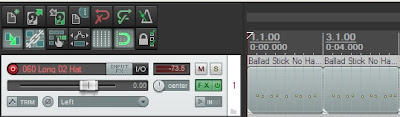
Doing so gives me, one, a better metronome as opposed to the usual beep sound that comes with most DAWs, and second, it serves as my drum template. I would already have one-third of my drum programming done since all I have to do next is add the embellishments.

Doing so gives me, one, a better metronome as opposed to the usual beep sound that comes with most DAWs, and second, it serves as my drum template. I would already have one-third of my drum programming done since all I have to do next is add the embellishments.
Keith Wyatt's All-In-One Blues Shuffle Rhythm
I'm saving this for reference. I've always wanted to learn how to play the shuffle this way.
Source: Guitar World, October 2012
Source: Guitar World, October 2012
NOOB HOME RECORDING (006) - Plastic Flowers
As I mentioned in my previous post, I was abandoning "The Metro" cover and re-record an old original song instead. It's called "Plastic Flowers" written back in the 1990's by my friend and bassist, Paul. This was actually our first song as a band.
I tried to record it in on my own in 2005 with the following setup:
Vocals - using a cheap Sony dynamic microphone
Guitar - my Les Paul Jr.
Bass - also my Les Paul Jr.
Drums - a Boss DR-500 drum machine
Effects - Zoom 505 (1990's release)
All audio was run through a Tascam 4-Track tape recorder, no tape, which was hooked up via it's RCA outs into the stock sound card of a Dell PC, running Audacity. The guitars and "bass" was recorded by mic'ing a Crate 15w practice amp. This was my first taste of recording on a PC. I just dove in not really knowing exactly how it's done but Audacity was so intuitive that I got results which was far better than recording on a 4-track at the time.
Here's the old recording that I'm going to use as a reference.
Pill - plasticflowers(hall) by mario gozum aka PILL
Next: NHR 007 - Laying the Foundation
I tried to record it in on my own in 2005 with the following setup:
Vocals - using a cheap Sony dynamic microphone
Guitar - my Les Paul Jr.
Bass - also my Les Paul Jr.
Drums - a Boss DR-500 drum machine
Effects - Zoom 505 (1990's release)
All audio was run through a Tascam 4-Track tape recorder, no tape, which was hooked up via it's RCA outs into the stock sound card of a Dell PC, running Audacity. The guitars and "bass" was recorded by mic'ing a Crate 15w practice amp. This was my first taste of recording on a PC. I just dove in not really knowing exactly how it's done but Audacity was so intuitive that I got results which was far better than recording on a 4-track at the time.
Here's the old recording that I'm going to use as a reference.
Pill - plasticflowers(hall) by mario gozum aka PILL
Next: NHR 007 - Laying the Foundation
Refocusing Update
I've been totally sidetracked by my home improvement project. Anyway, here's an update for the Digital Lab:
THE BLOG - Still serious about the title change. I have some ideas floating in my head.
NOOB HR - Was working on covering "The Metro" but I'm having trouble with copyright worries... I'd like to invoke fair use but what should I do with the finished product? I found out, to play it safe, I needed to get a license to ensure proper ass coverage... BUT there's the cost. I think it's not worth it, so... I'm abandoning this project and restarting with an original song instead. More on that later.
DISCOVERING REAPER - Dabbled with it a bit. Still don't know much about it. I'll use it on the new Noob HR project.
GUITAR MOD - I already have a nice humbucker to replace the one on my Epiphone LP Jr. The plan is to install it with coil tapping options... then the old humbucker will go to the Silvertone SS10 converting it into an HSS config... also with coil tapping features.
And there you have it!
THE BLOG - Still serious about the title change. I have some ideas floating in my head.
NOOB HR - Was working on covering "The Metro" but I'm having trouble with copyright worries... I'd like to invoke fair use but what should I do with the finished product? I found out, to play it safe, I needed to get a license to ensure proper ass coverage... BUT there's the cost. I think it's not worth it, so... I'm abandoning this project and restarting with an original song instead. More on that later.
DISCOVERING REAPER - Dabbled with it a bit. Still don't know much about it. I'll use it on the new Noob HR project.
GUITAR MOD - I already have a nice humbucker to replace the one on my Epiphone LP Jr. The plan is to install it with coil tapping options... then the old humbucker will go to the Silvertone SS10 converting it into an HSS config... also with coil tapping features.
And there you have it!
Refocusing
As much as I'd like this blog to be the repository of ALL my creative endeavors, I'm finding that DIY Digital Lab is heavily gearing towards music and music production in the home recording arena.
So I'm toying with the idea of changing the blog title (but not the web address) to something more related to this little hobby of mine.
For my drawings, I think they will be more appropriate for the blog I just started, I AM RONIN, which is about my adventures in making comics and graphic novels.
Then I have EXPLODING TUNA which I can use for anything other than music and graphic and comics art.
We'll see.
Silvertone SS10 Update Part 1: The Good and The Bad
Following up on my initial review, after playing with the SS10 on and off over several months, I was able to pinpoint the good and the bad on my budget guitar.
Subscribe to:
Posts (Atom)